Music Is How She Speaks
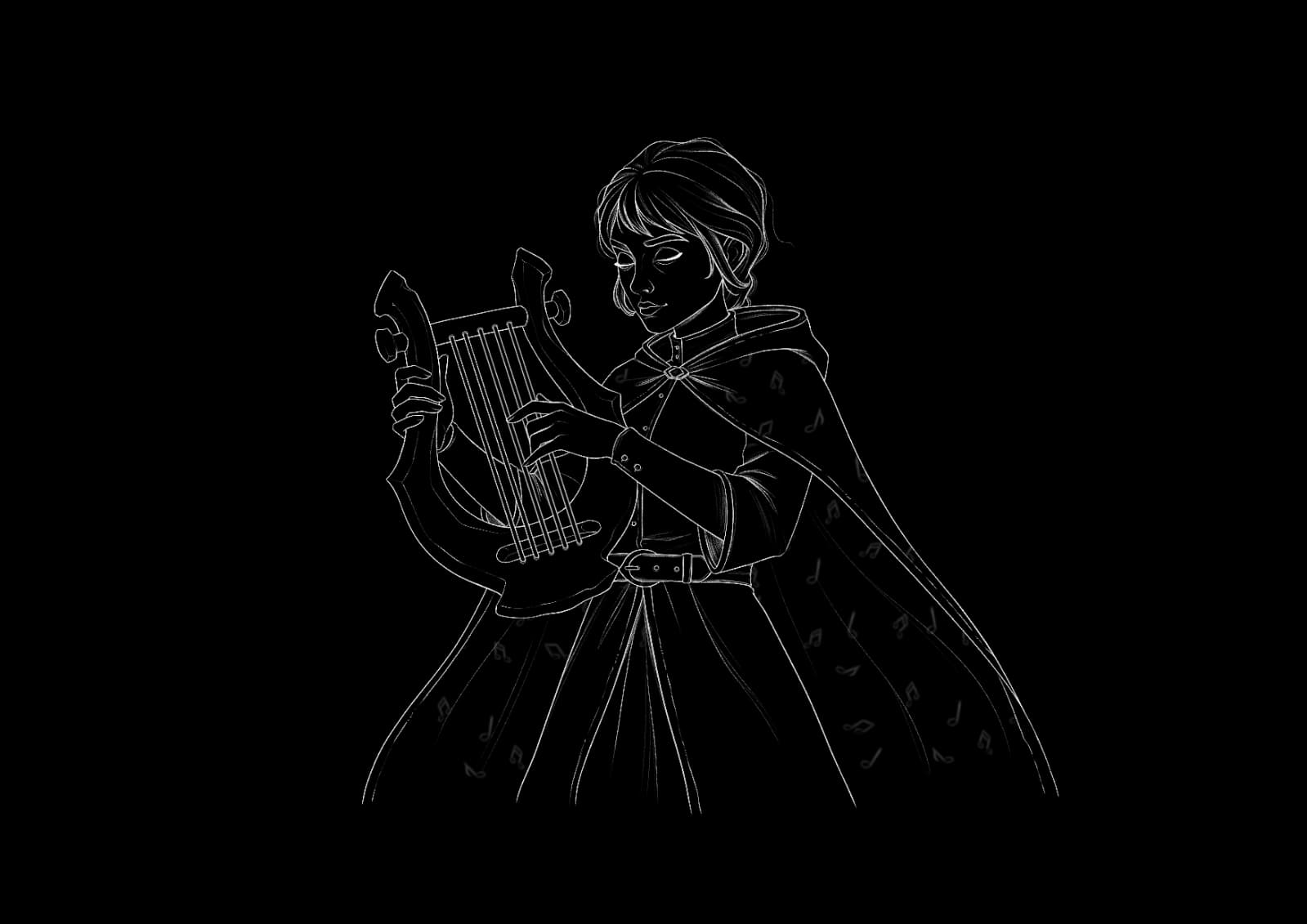
When words aren't enough
Music has always been emotionally essential to me. Not as background. Not as decoration. As a language.
When you don't have a voice — literally or not — music becomes something else entirely. It becomes the way you reach people. The way you make them feel what you can't say out loud.
That's exactly what it is for Lyra.
She buried her voice to survive. But the music didn't disappear. It stayed inside her, waiting. And when it finally comes out, it doesn't just fill the silence — it fills everything the silence was protecting.
Music is her refuge. Her freedom. Her way of speaking when speaking isn't safe.
I wanted players to feel that. Not just hear the soundtrack, but feel it as part of Lyra's story. As something that belongs to her.
Why the harp
I've been a musician for a long time. I play electric bass. I've also learned some cello — not much, but enough to understand what a string instrument can do to you emotionally. How it adds layers to what you feel. How it changes things from the inside.
For Lyra, I wanted something specific. Something delicate. Something that could seem fragile but carry enormous power underneath.
The harp.
There's something about the harp that no other instrument quite has. It sounds like it could break at any moment — and yet it fills a room. It's intimate and vast at the same time. Quiet and overwhelming. It felt like Lyra.
Fragile on the surface. Powerful underneath.
Where it comes from
In Lyra's real world, she carries one object everywhere she goes. A small music box — the only thing her mother left behind. It played a melody once. But as her mother disappeared, little by little, the music faded with her. Note by note. Until silence.
Lyra has protected that box ever since. It's the one thing she won't let go of. And on its lid, engraved in the wood — a harp.
In the dream world, the music box becomes something more. Not exactly a weapon. But it fights for her. It protects her while she's still learning how to protect herself. It's alive in a way she isn't yet ready to be.
And as Lyra grows throughout the game, so does it.
The harp isn't just an instrument in this story. It's the connection to her mother. It's the voice she lost. It's everything she's trying to find.
The first time I heard it
When Roberto sent me the finished main theme, I got goosebumps.
It had everything I wanted it to have — a shadow of darkness, a thread of calm, and something else I can't fully put into words. And honestly, if I could describe it completely, it probably wouldn't be working right.
That's the thing about music. When it's doing its job, it reaches somewhere language doesn't.
That's what I want for this game. Not a soundtrack you listen to. One you feel.
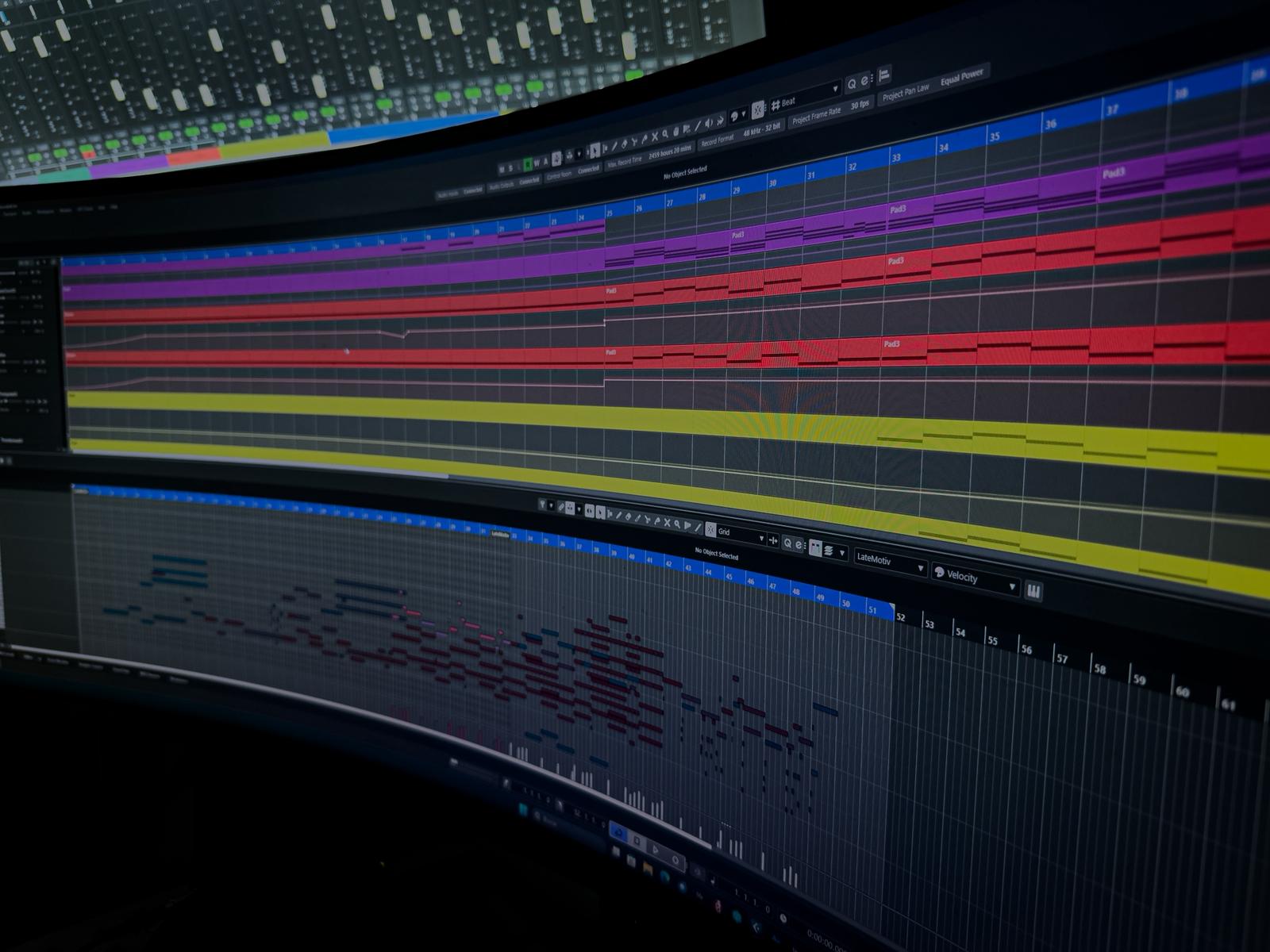
Roberto Acebrón — composer
I asked Roberto a few questions about his process. This is what he told me.
What do you want people to feel when they listen to the music of Echoes of Lyra?
"The soundtrack will be a path toward hope — from the deepest sadness. I want it to be a rollercoaster of emotions. Not just because of the narrative weight it carries, but because one of my greatest references is Nobuo Uematsu (composer of most of the Final Fantasy soundtracks) and I'd like to transmit what he evokes — a whirlwind of emotions."
When I told you the harp was going to be the main instrument — what did you think?
"At first, a little apprehension — I'd never composed anything for harp before and I think it's going to be a beautiful challenge as much as a difficult one. I have no doubt, the harp is one of the instruments that suits this project best: delicacy, feeling, nostalgia... I think it's the perfect instrument to evoke the DNA of Echoes of Lyra in the player."
Where did the main theme come from?
"Honestly, it came from trying a thousand things. I had in mind that it needed to be something linear and calm since the first idea was to use it for the main menu, but over the days it kept mutating into a calm beginning with a slightly more epic chorus and an emotional ending. I think it was a perfect combination and I hope people like it."
How many versions went through your hands before arriving at this one?
"I think as a composer, it's one of my biggest problems: every time I listen back I'd change something small, and when I go through the different stages of composition — even though I try to leave days in between so I don't burn out — the same thing happens and I end up changing harmonies, instruments, the mix, etc. But I don't think I'm the only one this happens to, so I'd say infinite versions."
Is there something in the main theme that most people won't notice but that matters to you?
"In the first minute of the song, around second 40, there are very subtle harp notes that define the feeling of the song really well and that feel very comforting. They sound like home."
When did you know it was finished?
"Not being a professional musician, it's very important for me to compare my songs with those of other composers. When I have the feeling that it sounds professional, rounded — when I step back from the composition and try to listen to it as an outsider, and it's able to transmit exactly what I want — that's it! The team's feedback also helps a lot. I remember one version that sounded like '2001: A Space Odyssey' because of the opening chords, and from listening to it so many times I hadn't even noticed. After listening to a song hundreds of times, you lose the feeling and you need to stop and refocus for everything to flow again."
How do you work? References, images, silence...?
"Without a doubt, I start from references. When I want to compose something that provokes a specific feeling, I listen to soundtracks that provoke exactly that same thing in me. From there I analyze the themes, the harmonies, the progressions. While I compose, I keep learning more about harmony and about the particularities of my favourite composers, like Nobuo Uematsu, who I've already mentioned."
What's the hardest thing about composing music for a video game?
"I don't think it's harder to compose for video games than for cinema, for example. There are particularities to take into account: transitions, loop themes, procedural music, etc. I imagine other fields have their own particularities too, but in the end, composing and transmitting is the same for any audiovisual medium."
How would you describe working on this project?
"As I said, this is a huge opportunity for me — it's a project that fulfills me and above all, one where I can grow as a composer. If something is surprising me, given the kind of project this currently is, it's the incredible commitment from the team, the care being put into everything, and the great work being done so that we all function like clockwork. Echoes of Lyra will be a project we can all be very proud of."
Original score by Roberto Acebrón.
Keep reading
Stay in the loop
Be the first inside Velaria. Early art, the music and the real process behind the game, before anyone else.
Entra en Velaria antes que nadie. Arte, música y el proceso real del juego, antes que el resto.