The First Echoes
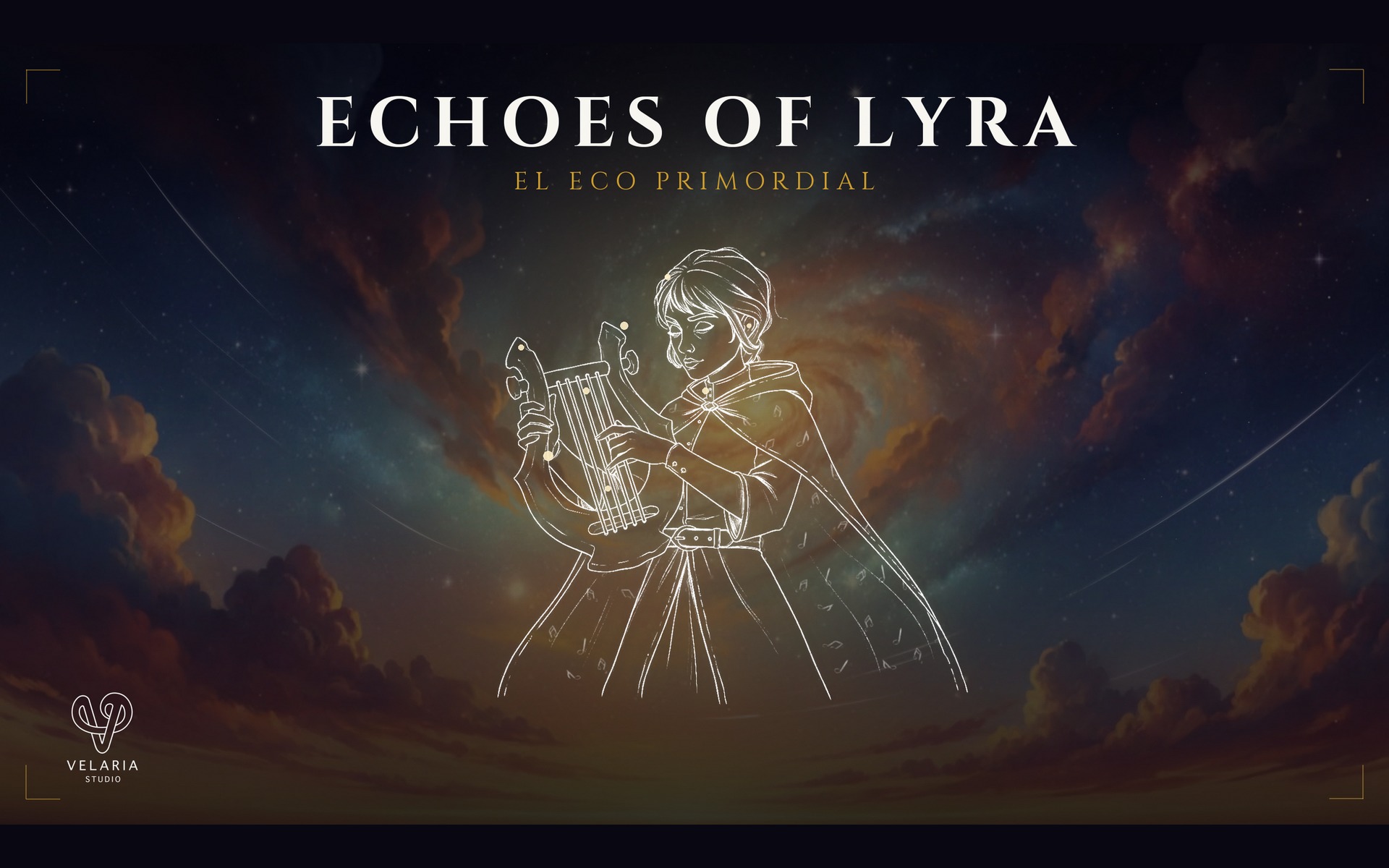
Almost ten years ago, I was a student at Lightbox. This past Tuesday, June 23rd, I went back — not as a student this time, but to share something of my own. To stand in front of a room full of people and show, out loud and for the first time, the project I've poured the last year into: Echoes of Lyra.
I'd never talked about this in public. And it's not the same. Building it in silence, night after night, alone with the screen, is one thing. Looking up, meeting the eyes of a room full of strangers and telling them, with no safety net, this is what I carry inside — that's something else entirely.
Far more people came than I ever could have imagined, and they were genuinely into it: part of the Unreal community, students from the school, and curious people who showed up not quite knowing what they'd find.
Ten years giving life to other people's stories
I've spent about ten years working as a 3D animator for film and games, giving life to other people's stories. Echoes of Lyra is the first time I'm telling my own. And saying it out loud, in front of people, makes it real in a way that's a little frightening.
Right before I started, I felt something that had never happened to me before: my mouth went dry, cottony — my body reminding me of what this meant to me. Nerves, excitement, even a little fear. I decided not to hide it. I stayed vulnerable from beginning to end, because I believe it's the only way to be honest with the people listening. And the more I opened up, the more they did too.
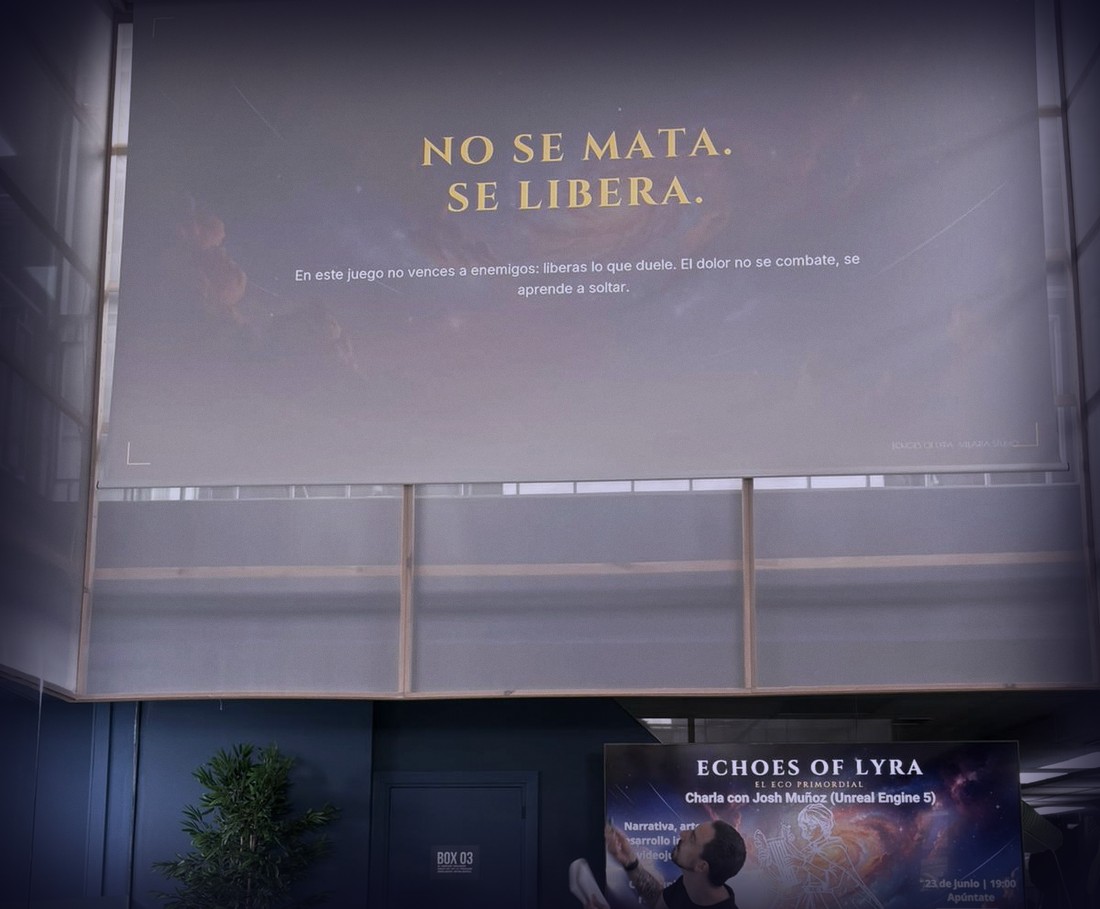
Because this isn't a game about explosions or high scores. It's about a girl who lost her voice, about pain and the loneliness around it. Putting something like that out there, in front of strangers, felt like handing them something fragile and hoping they'd hold it gently.
They did.
What I showed
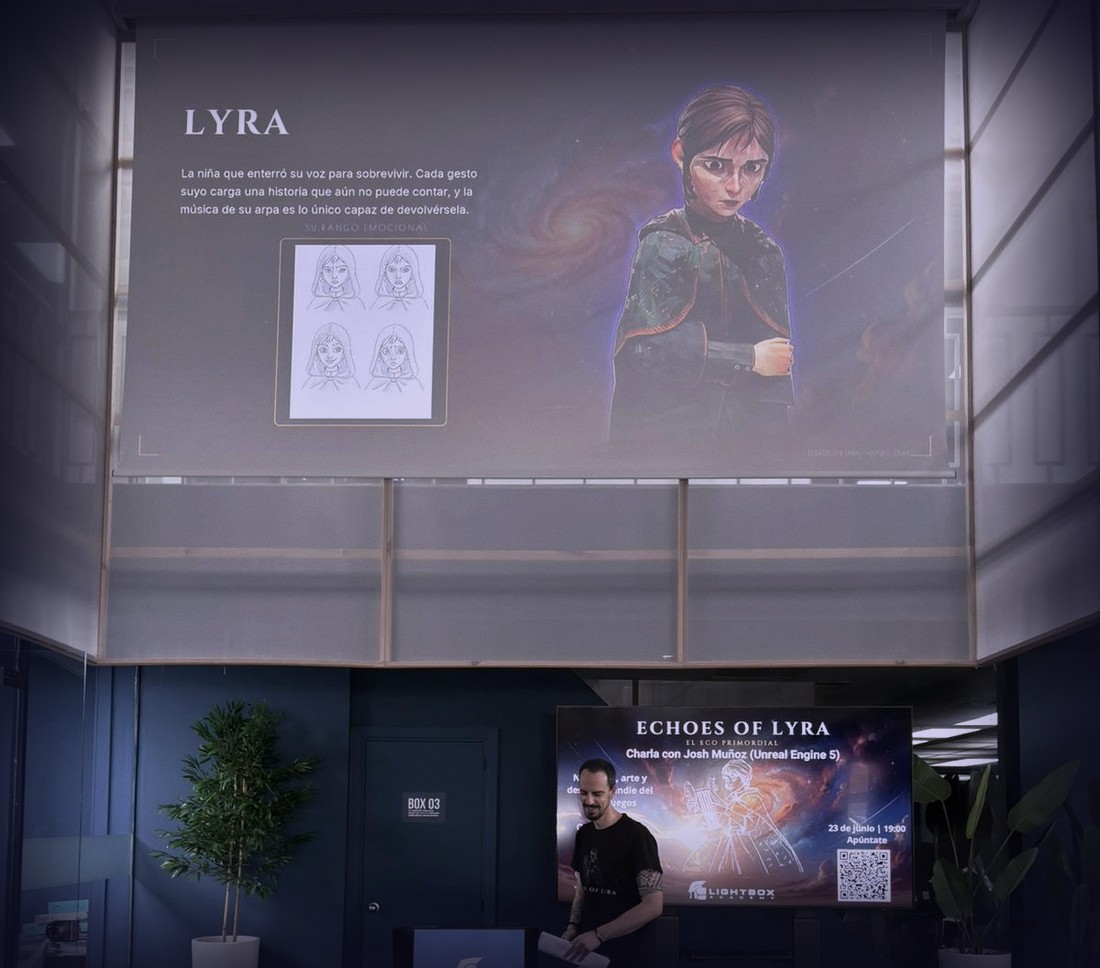
I played the concept trailer, some images of the characters in-game, shots of Velaria's environments, and a short walk through one of them. Just enough for them to feel it, not to spell it all out.
What happened after
When I finished, people didn't just clap and leave. They came up. They stayed. We talked for a long time: many wanted to understand how a project like this had come this far, and above all, how we handle the most delicate part — the trauma, the psychology — without cheapening it.
But that wasn't the part that stayed with me.
The echoes came back
In the days that followed, some people wrote to me. Not about game design, or art, or engines. They wrote to share something of their own: pieces of their own stories, things they carry. Some were just looking for someone to listen.
I won't share any of it. It isn't mine to share, and protecting that trust matters more than any devlog. I'll only say this: reading those messages was one of the most moving things that have happened to me since I started this journey. That's when I understood the game was already doing the one thing I most want it to do: reach someone.
Why this matters
This is why Echoes of Lyra exists. Not to be admired, but to reach someone. To make a person feel a little less alone in what they carry. I've always said anyone could be Lyra. That night, and the days that followed, it stopped being just a phrase.
And one honest thing: I'm not a therapist. I can listen, I can care, but I'm not the one who heals anyone, and I'd never pretend to be. That's exactly why we work with Ángeles, our clinical psychologist, and why we take this responsibility so seriously.
And I want to thank Lightbox Academy for opening their doors and letting me show Echoes of Lyra there for the very first time. Ten years ago I walked into those same halls to learn how to give life to other people's stories. On Tuesday I came back to tell my own out loud, in the very same place. And it turns out that when you finally say something out loud that you've been holding in, sometimes someone answers. Sometimes it even echoes back.
Josh (El Echo)
Keep reading
Stay in the loop
Be the first inside Velaria. Early art, the music and the real process behind the game, before anyone else.
Entra en Velaria antes que nadie. Arte, música y el proceso real del juego, antes que el resto.