Getting the Pain Right
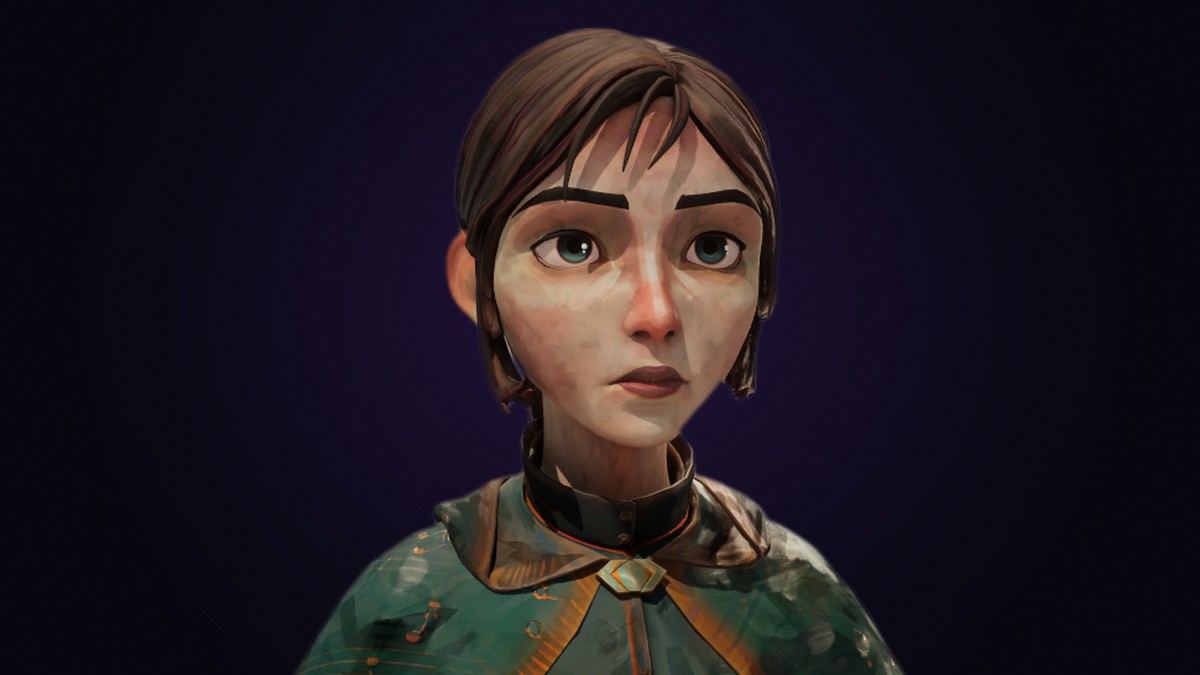
A game about pain can't be careless
Echoes of Lyra is a game about a girl who stopped speaking because speaking was never safe. It touches on trauma. And the moment you decide to build a game around something that real, you inherit a responsibility: to get it right.
What fiction usually gets wrong
We've all seen it. Mental illness in films and games, flattened into a cliché — the same prototypical symptoms, always at maximum intensity, always identical. But pain doesn't work like that. It's quiet. It's specific. It looks different in every single person. If we were going to put trauma at the centre of a game, the last thing I wanted was to turn it into a costume.
Why I couldn't do this alone
I'm not a psychologist. I have my own story, and I have instincts — but instincts aren't enough when you're handling something this delicate, and when the people who play it might be carrying the very things Lyra carries.
So we brought in someone who does know. Ángeles Esteban is a clinical psychologist and psychotherapist with over fifteen years of experience, a doctor in applied psychology, specialised in childhood and adolescence from many different schools. She joined the project to make sure we treat all of this with the honesty it deserves.
The idea I keep coming back to
If I had to keep one idea from all of this, it's something that runs through Ángeles's words below and through the whole game: that people who suffer don't only suffer from the pain — they suffer from the loneliness around it. From feeling alone in it.
That's exactly what Echoes of Lyra is about. Lyra is alone in her silence, until she isn't. If this game helps one person feel a little less alone in what they carry, every late night will have been worth it.

Ángeles Esteban — clinical psychologist & sensitivity consultant
I asked Ángeles a few questions. This is what she told me.
From your clinical experience, how is trauma usually portrayed in fiction — film, series, games — and what most often goes wrong?
"When I look at how trauma and mental health are handled in film, series or games, the first thing I find is that they treat it superficially and stereotypically. Psychological difficulties don't always present the same way; like physical illness, mental illness takes on the particular, personal shape of each person. But on screen it's almost always shown through the most prototypical symptoms, at their maximum expression. A depression can be more or less severe, and not everyone behaves the same way — some people can't sleep, others sleep far too much. That individuality is rarely shown. Instead it's always the same stereotype, at high intensity."
When I explained the project to you, what was the first thing that caught your attention?
"What I liked first was that it approaches something so essential in my experience — mental health, and especially the trauma a person carries — from a far more accessible angle, particularly for a young audience. Reaching what a person feels through something more playful helps, and at the same time it normalises psychological suffering. In my experience, everyone who suffers doesn't only suffer from the pain, but from the loneliness that so often comes with it. A person suffering psychologically feels alone in it — partly from the mistrust they've built around relationships, and partly because mental health has been a taboo for far too long, leading people to hide their struggles as if they were a weakness, even a shame. A video game taking on this challenge feels like a real step toward breaking that loneliness."
What does it mean to you that a video game decides to take mental health, trauma and the psychology of its characters seriously?
"I see a game placing trauma and mental health at the heart of its story as a huge step forward in integrating psychology and emotional suffering as something that belongs to every human being. Not long ago, psychology was understood as something for a select few — 'the crazy ones.' Fortunately the trend now is to normalise mental health, and games like this one can powerfully push that progress forward."
The protagonist lost her voice — not physically, but as a defence mechanism. The lyre and music become her way of expressing herself. From your perspective as a psychologist, can music really work as a therapeutic mechanism?
"Yes — the influence of art, and especially music, in psychological therapy has been widely studied. Art therapy and music therapy are disciplines that have shown very good results. Because of her history, this person has learned — or rather, not learned — to express her emotions and difficulties by putting them into words; in cases like this, expression through art becomes far more important. In the game, the protagonist's psychological suffering has caused her to lose her voice, so music becomes her main way of communicating, and of recovering her emotional stability."
A conversation with Ángeles Esteban — clinical psychologist and psychotherapist (Psyche Psicología).
Keep reading
Stay in the loop
Be the first inside Velaria. Early art, the music and the real process behind the game, before anyone else.
Entra en Velaria antes que nadie. Arte, música y el proceso real del juego, antes que el resto.